Set Yourself Up for Success

Updated: Apr 25
Use the initial consultation/ examination to glean essential information about candidates for complete dentures
Part 1 of a 5-part series on Keys to Success and Predictability With Fabrication of Complete Dentures
Part 1 (this article): Set Yourself Up for Success — Use the initial consultation/ examination to glean essential information about candidates for complete dentures
Part 2: Making A Great Impression — Simplified accurate edentulous impressions and other records for enhancing complete denture success
Part 3a: Accurate Denture Records — How to Determine and Record Tooth Position
Part 3b: Simplified Accurate Denture Records — How to determine and record VDO and centric relation
Part 5: Delivering Successful Complete Dentures
Synopsis:
This course focuses on essential elements of the consultation/examination appointment for enhancing the predictability and success of complete denture fabrication. It breaks down this initial appointment into three phases: preexamination consultation, clinical edentulous examination and postexamination consultation.
In the preexamination consultation phase, the emphasis is on actively listening to the patient. Understanding their previous experiences with dentures, their adaptability to prostheses, and their specific desires and expectations for new dentures is essential.
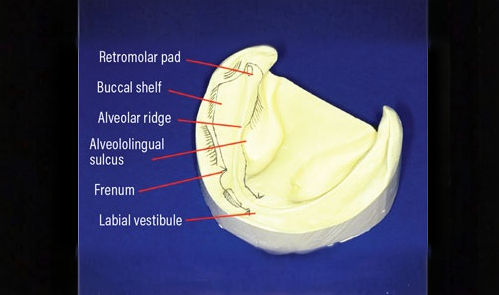
The clinical examination involves an assessment of the patient’s oral conditions. This helps determine their restorative needs in alignment with their desires and expectations. The dentist evaluates oral health, anatomy and factors that may affect the success of the dentures, such as stability of the temporomandibular joints and potential airway obstructions.
The final phase, the postexamination consultation, includes a discussion of the findings from the consultation and examination. Here, various options and recommendations are presented, tailored to the patient’s individual needs, wants and expectations.
Additionally, a comprehensive informed consent process is crucial and should cover all treatment options and their benefits, risks and associated costs to ensure transparency and foster patient compliance.
Educational Objectives:
Upon completion of this course, you should be able to:
Conduct a preexamination consultation that establishes open communication and patient rapport, leading to a better understanding of patient wants and expectations.
Provide a practical clinical edentulous examination, including evaluating the patient’s oral health and identifying anatomic factors influencing denture success to determine the patient’s needs.
Discuss the importance of patient-centered care, including: active listening and empathetic communication to create a comfortable environment where patients can express their wants, expectations and concerns; and incorporating information from the findings of the clinical examination to perform appropriate treatment.
Conduct a thorough informed consent process, including a discussion of treatment options, risks, benefits and fees, and the recognition of the patient's right to choose no treatment.